
SKYVVA iPaaS (Integration Platform as a Service)
SKYVVA iPaaS is designed as a comprehensive, all-in-one solution specifically for Salesforce integration. It is more than just a connector; it is a complete platform for creating, managing, and monitoring integrations directly in your Salesforce organization. SKYVVA extends your existing Salesforce infrastructure and transforms it into an efficient integration hub that connects all your critical systems without additional middleware.
Whether you need cloud-to-cloud or cloud-to-premises connections, you can seamlessly integrate your Salesforce environment with all your external systems or third-party applications within weeks instead of months.
Salesforce is at the heart of many enterprises, and the ability to exchange data between Salesforce and other systems is critical for informed decision-making, efficient processes, and outstanding customer experience. Salesforce itself offers a comprehensive CRM system, but no enterprise operates exclusively on Salesforce alone. There are ERP systems, marketing tools, financial software, and numerous other applications that are part of daily operations.
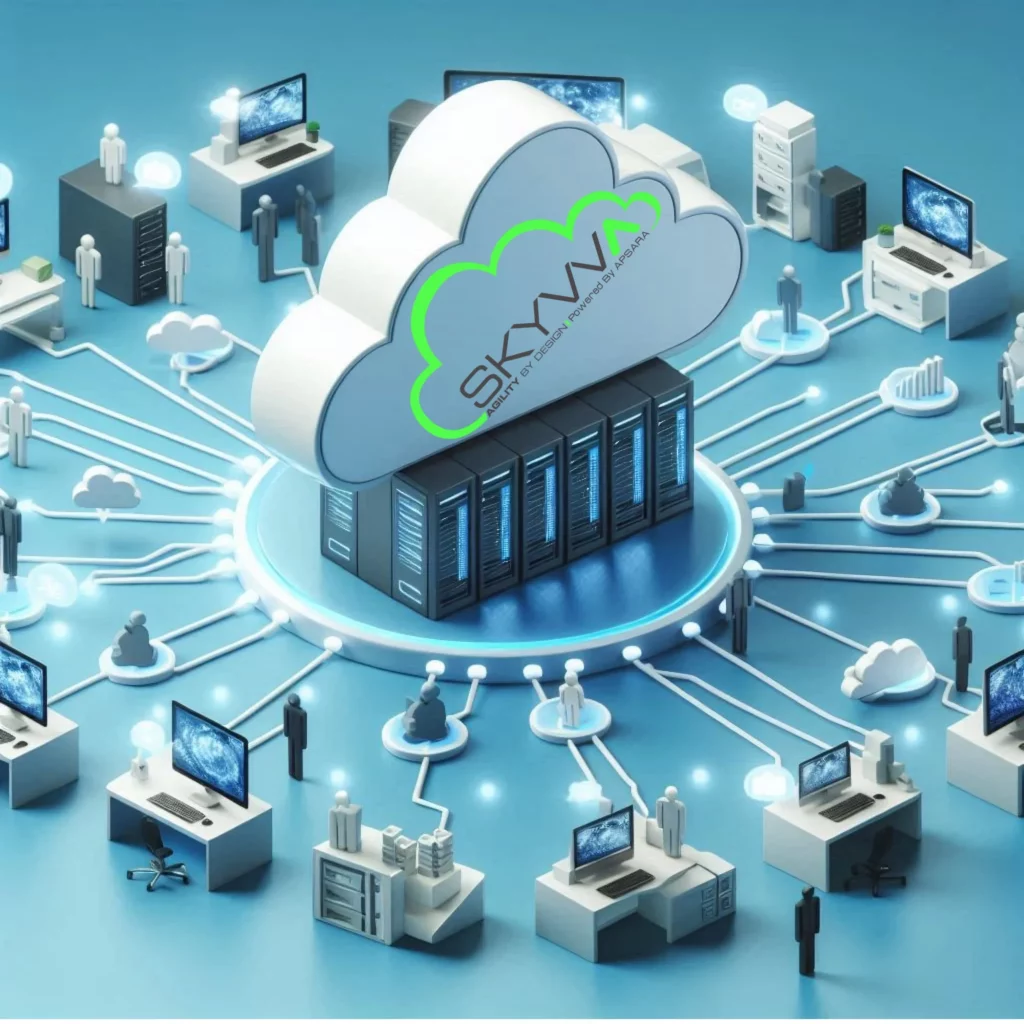
This is exactly where SKYVVA's iPaaS solution comes in: it enables enterprises to integrate all these different systems with one another without resorting to complicated programming. This solution is fully integrated within the Salesforce platform and leverages Salesforce.com services to ensure seamless integration.
The SKYVVA iPaaS integration solution offers a multitude of benefits that support enterprises in integrating their processes:
- High Availability and User-Friendliness: Because the SKYVVA app is installed on the Lightning Platform, it offers high availability and a Salesforce look & feel that integrates seamlessly into Salesforce Sales and Service Cloud.
- Seamless Integration: SKYVVA enables seamless integration of Salesforce with external systems without requiring additional middleware. This reduces integration complexity and costs.
- End-to-End Monitoring and Automation: The solution provides comprehensive monitoring and process automation capabilities. Enterprises can monitor their data flows, quickly identify and correct errors, and automate processes to save time and resources.
- Cost-Efficiency: SKYVVA iPaaS offers a cost-efficient solution that enables enterprises to meet their integration requirements without breaking their budgets.
- Flexibility and Adaptability: The SKYVVA solution is flexible and can be combined with other middleware solutions. SKYVVA supports both cloud-based and on-premises systems.
- Scalability: Enterprises grow, and their requirements change. SKYVVA enables enterprises to adapt and scale their integrations accordingly without encountering technical limitations.
Why Salesforce and SKYVVA Are the Perfect Fit
SKYVVA is an excellent example of how a Salesforce partner can develop a solution that complements Salesforce's strengths and expands the possibilities for our customers. SKYVVA is part of the Salesforce ecosystem and an innovative and powerful iPaaS solution that can help enterprises unlock the full potential of Salesforce.
By integrating SKYVVA, our customers can optimize their entire business processes by connecting Salesforce with other systems. This not only leads to better data utilization but also improves collaboration within the enterprise. Employees from different departments can access the same data and thus make better decisions.
In summary, SKYVVA iPaaS is a powerful solution that enables enterprises to seamlessly integrate their different systems. Through its user-friendliness, flexibility, and standard connectors, it is an ideal complement for any enterprise using Salesforce.
iPaaS (Integration Platform as a Service)
- Various Integration Patterns: iPaaS supports various integration patterns, such as real-time integration (via webhooks), batch integration (time-based data exchange), message-based messaging (via message queues), and API-based integration.
- ETL Capabilities (Extract, Transform, Load): iPaaS platforms offer powerful ETL capabilities to extract data from various sources, transform them into a unified format, and load them into target systems.
- Data Mapping: iPaaS enables visual mapping of data fields between different systems to ensure that data is transferred and interpreted correctly.
- Workflow Orchestration: iPaaS enables the creation of complex workflows that connect and automate multiple applications and processes.
- Monitoring and Management: iPaaS provides comprehensive monitoring and management functions to monitor the status of integrations, detect and resolve errors, track performance metrics, and manage integrations.
- API Lifecycle Management: Some iPaaS solutions offer capabilities for the development, deployment, documentation, and management of APIs.
- Security: iPaaS platforms place great emphasis on security and offer features such as encryption, access control, authentication, and authorization to ensure data integrity and confidentiality.
Comparison: SaaS vs. iPaaS
| Feature | SaaS | iPaaS |
|---|---|---|
| Architecture | Multitenancy, Single Instance | Cloud-based, scalable, distributed |
| Updates/Maintenance | Automatic by provider | By the iPaaS provider |
| Configuration/Customization | Customization possible, adaptation mostly limited | Extensive configuration and customization options (e.g., scripting, custom connectors) |
| Integration | Often via APIs, but limited scope | Core function: extensive connectors, various integration patterns, workflow orchestration |
| Data Handling | Data isolation within the application | Data transformation, mapping, validation |
| Monitoring/Management | Limited monitoring and management functions for the user | Comprehensive monitoring, logging, alerting, error handling |
| Development Focus | New features for the application itself | New connectors, integration functions, performance improvements, improved developer tools |
| Complexity | Relatively low | High, requires integration expertise |
Practical Example to Illustrate the Interaction
An e-commerce enterprise uses Shopify (SaaS) for its online store, Mailchimp (SaaS) for email marketing, and Salesforce (SaaS) for customer management. To optimally manage the entire customer lifecycle, the enterprise uses an iPaaS solution. This connects the three SaaS applications to one another:
- New customer orders in Shopify are automatically created in Salesforce as new contacts.
- Customer information is synchronized between Salesforce and Mailchimp to enable personalized marketing campaigns.
- Order status updates in Shopify are transferred to Salesforce to optimize customer service.
By deploying iPaaS, the enterprise can automate its business processes, improve data consistency, and gain a 360-degree view of its customers.

SaaS (Software as a Service)
SaaS is more than just software delivered over the internet. It is a complete delivery and business model that encompasses the following aspects:
- Multitenancy: A single instance of the software is used by multiple users (tenants). Each user has their own data and configurations but is part of the same software installation. This enables economies of scale for the provider.
- Automatic Upgrading: The provider is responsible for maintaining, updating, and patching the software. Users automatically benefit from the latest features and security improvements.
- API Access: Many SaaS applications offer APIs (Application Programming Interfaces) that allow interaction with other systems.
- Customization vs. Adaptation: SaaS typically offers customization options (e.g., layout adjustments). However, adaptation options are usually severely limited to avoid compromising multitenancy and software maintainability.
- Data Isolation: Although all users share a software instance, their data is isolated from one another.
- Metrics and Monitoring: SaaS providers carefully monitor the usage of their software to detect performance issues, optimize utilization, and analyze trends.

Ready for a native Salesforce integration?
Discover how SKYVVA connects your system landscape with Salesforce — no middleware, no compromises.
Request Demo →